Ultimate Tips for Choosing a Counterbalanced Forklift?

Time:2026-06-10 Author:Isabella
0%

Choosing the right counterbalanced forklift is essential for efficient warehouse operations. These forklifts are designed to lift, transport, and stack goods effectively. However, selecting the most suitable model can be overwhelming.

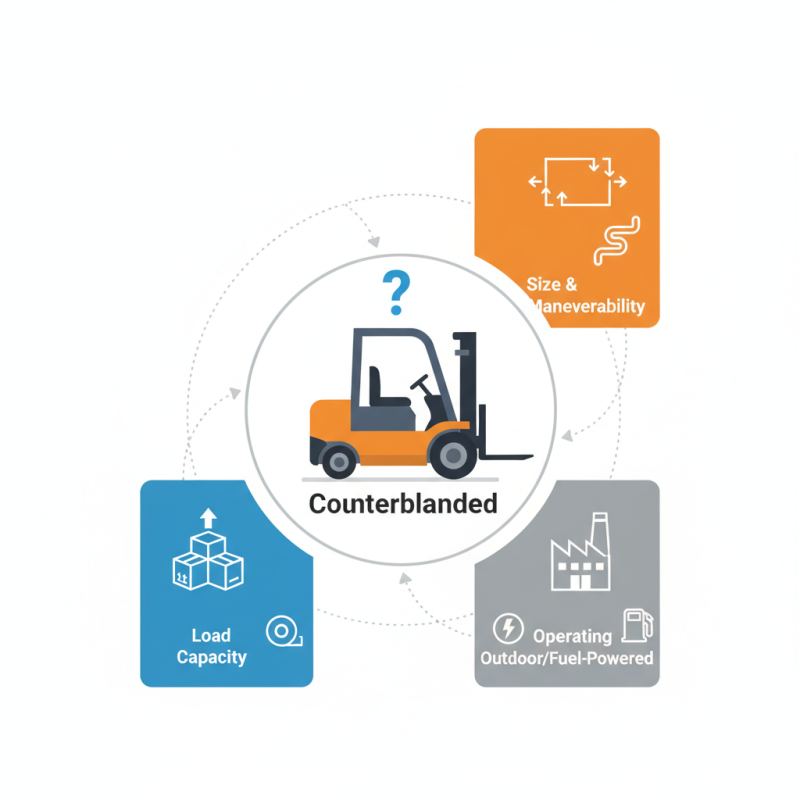
Consider factors such as load capacity, size, and maneuverability. A counterbalanced forklift with insufficient capacity may lead to accidents. Likewise, an oversized model can hinder navigation in tight spaces. It's critical to assess your specific needs before making a choice.

Additionally, think about the operating environment. Indoor settings often require electric models, while outdoor spaces might benefit from fuel-powered units. Ignoring these factors can result in poor performance and increased maintenance costs. Understanding these details will help you make an informed decision.
Ultimate Tips for Choosing a Counterbalanced Forklift?

Understanding Counterbalanced Forklifts: Key Features and Benefits

Counterbalanced forklifts are essential in many industries. These versatile machines balance loads in tight spaces. Their design allows for excellent maneuverability. A counterbalanced forklift can easily navigate crowded warehouses. According to industry reports, around 80% of material handling involves these forklifts. Their unique feature is the counterweight at the rear, which provides stability. This configuration is beneficial when lifting heavy loads.

When choosing a counterbalanced forklift, consider the load capacity and height. Most forklifts can lift between 3,000 to 15,000 pounds. Understanding these specifications is crucial for safety and efficiency. The wrong choice can lead to accidents and damage. The lower the center of gravity, the better the stability. Reports show a 30% increase in efficiency when using the appropriate forklift for the task.

Operator training is vital for maximizing the benefits of counterbalanced forklifts. Proper training reduces accidents by approximately 25%. Still, many operators may overlook safety protocols, leading to potential hazards. A reliable forklift not only eases transportation but also improves workflow. Observing these factors is key to fruitful operations. Regular maintenance checks can enhance longevity but are often neglected. Keeping these machines in top shape is crucial for overall performance.

Assessing Your Operational Needs: Choosing the Right Capacity

When selecting a counterbalanced forklift, understanding your operational needs is crucial. Capacity is a key factor. Assess the weight of the loads you'll handle. Is it consistent? Or does it vary? This will influence your choice significantly.

Consider the lift height as well. Will you be stacking pallets? A higher lift capacity might be necessary. Additionally, think about the environment. Indoor and outdoor operations require different capabilities and design considerations.

Here are some tips to guide your decision. First, evaluate your most common load weight. Ensure the forklift can comfortably handle it. Also, think about future needs. Will your operations grow? Selecting a model that supports potential expansion can save costs later. Finally, engage with operators. Their feedback can uncover unique requirements. It’s easy to overlook small yet critical details, leading to issues down the line. Investing time in this assessment ensures a well-rounded choice that aligns with your specific needs.

Evaluating Forklift Design: Stability, Maneuverability, and Ergonomics

When evaluating forklift design, stability, maneuverability, and ergonomics are crucial for operational efficiency. A counterbalanced forklift should maintain a low center of gravity to ensure stability. The Occupational Safety and Health Administration (OSHA) reports that improper handling accounts for 20% of forklift accidents. Research indicates that a well-designed forklift can reduce the risk of tipping.

Maneuverability is another vital factor. The turning radius impacts how effectively a forklift can navigate tight spaces. Using data from the National Institute for Occupational Safety and Health (NIOSH), it’s found that operators favor forklifts that can turn in under 10 feet. This can significantly improve productivity in warehouse settings.

Ergonomics plays a key role in operator comfort. Fatigue can lead to decreased attention and increased mistakes. According to industry reports, ergonomically designed forks reduce operator fatigue by up to 30%. Operators should pay attention to the seat height and controls for better reach.

Tips: Ensure the forklift’s cab provides adequate visibility. A clear line of sight minimizes hazards and boosts safety. Additionally, consider the frequency of use; high-use settings benefit from features that enhance user convenience. Investing in the right design can enhance safety and efficiency.

Ultimate Tips for Choosing a Counterbalanced Forklift

Maintenance and Safety Considerations When Selecting Forklifts

When selecting a counterbalanced forklift, maintenance is crucial. Regular inspections keep the equipment in top shape. Check fluid levels, tire pressure, and brakes before each use. Neglecting these aspects can lead to breakdowns or accidents. Simple maintenance routines can prolong the lifespan of your forklift.

Safety considerations play a vital role in choosing a forklift. Always review the operator's manual and safety guidelines. Training operators properly can prevent many workplace injuries. Additionally, evaluating the warehouse layout is essential. Narrow aisles or low ceilings may restrict the forklift's operation. Regularly updating safety protocols ensures a safe working environment.

Ultimately, balancing maintenance and safety is key. A well-maintained forklift operates efficiently. However, a forklift is only as safe as the knowledge of its operator. Continuous evaluation and feedback can improve both safety and performance. Regularly revisiting these aspects promotes a culture of safety and responsibility in the workplace.

Ultimate Tips for Choosing a Counterbalanced Forklift - Maintenance and Safety Considerations When Selecting Forklifts

Dimension Consideration Importance Level
Load Capacity Determine the maximum weight the forklift can lift. High
Fork Length Choose appropriate fork length based on the load type. Medium
Mast Type Select between simplex, duplex, or triplex masts for visibility and height. High
Turning Radius Important for maneuvering in tight spaces. Medium
Operator Comfort Assess seat design, visibility, and ergonomics. High
Safety Features Include systems like alarms, lights, and seatbelts. High
Maintenance Ease Consider accessibility for routine servicing and repairs. Medium
Fuel Type Choose between electric, diesel, or LPG based on application. High

Cost Analysis: Initial Investment vs. Long-Term Functionality and Value

When considering a counterbalanced forklift, evaluating the cost is essential. The initial investment may appear daunting. However, long-term functionality and value should also guide your decision. A forklift that meets your operational needs can save you money over time.

Tips for selecting a counterbalanced forklift include assessing your load capacity. Make sure the forklift can safely lift and transport your heaviest items. Think about the environment where the forklift will operate. Indoor and outdoor use requires different features. Always consider maintenance costs in your decision. Regular servicing can extend the forklift’s lifespan and reduce unexpected expenses.

Investing in the right forklift is not just about the price tag. Analyze potential operational costs, including fuel and repairs. Optimize your choice by considering how often and under what conditions you will use the forklift. Sometimes, a cheaper option upfront can lead to higher costs later on. Reflect on your usage needs and research thoroughly to ensure you choose wisely.

FAQS

: What are counterbalanced forklifts used for?

: Counterbalanced forklifts are used to balance loads in tight spaces and improve maneuverability in warehouses.

What is a key feature of counterbalanced forklifts?

Their key feature is a counterweight at the rear, providing stability when lifting heavy loads.

Why is operator training important?

Proper training reduces accidents and enhances safety, increasing efficiency in material handling tasks.

How much can most counterbalanced forklifts lift?

Most can lift between 3,000 to 15,000 pounds, depending on the specific model and design.

What maintenance checks should be performed regularly?

Check fluid levels, tire pressure, and brakes before each use to prevent breakdowns and accidents.

What impact does the right forklift choice have?

Choosing the appropriate forklift can increase efficiency by up to 30% for the given task.

How are safety protocols related to forklift operation?

Adhering to safety protocols is essential; neglecting them can lead to workplace injuries and hazards.

Can warehouse layout affect forklift operation?

Yes, narrow aisles or low ceilings can restrict the operation of forklifts, impacting efficiency.

What can neglecting maintenance lead to?

Neglecting maintenance can result in equipment breakdowns, accidents, and shortened machine lifespan.

How can feedback improve forklift safety?

Continuous evaluation and feedback can enhance both safety practices and operational performance in the workplace.

Conclusion

When choosing a counterbalanced forklift, it’s essential to understand its key features and benefits, as well as assess your specific operational needs, which include selecting the appropriate lifting capacity. The design of the forklift plays a crucial role, impacting its stability, maneuverability, and ergonomics, all of which contribute to efficient operation in various environments.

Additionally, it's vital to consider maintenance and safety aspects when selecting a counterbalanced forklift, ensuring that both operators and equipment function optimally. Conducting a cost analysis can help you weigh the initial investment against long-term functionality and value, allowing you to make a well-informed decision that meets both your budget and operational requirements.

Isabella

Isabella

Isabella is a dedicated marketing professional with a sharp focus on driving brand growth and engagement through strategic content creation. With an extensive background in digital marketing, she combines her passion for storytelling with her keen understanding of industry trends to deliver......